Product Overview
Our cleanroom curtains are engineered to provide a high-performance, flexible barrier for Modular Softwall Clean Rooms and Ceiling Suspended systems. Unlike standard industrial partitions, these curtains are specifically designed to minimize particle generation and maintain the pressure differentials required for ISO Class 1 through ISO Class 8 environments.
Each curtain system is custom-manufactured to your facility’s exact dimensions. By utilizing an overlapping design, we ensure a tight seal that prevents cross-contamination while allowing for easy personnel and equipment access.
Key Features & Benefits
-
Contamination Control: Designed to be non-outgassing and low-shedding to maintain the integrity of your controlled environment.
-
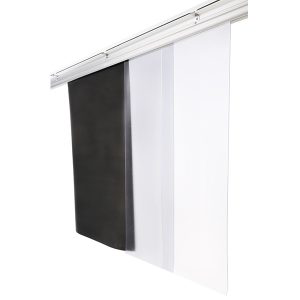
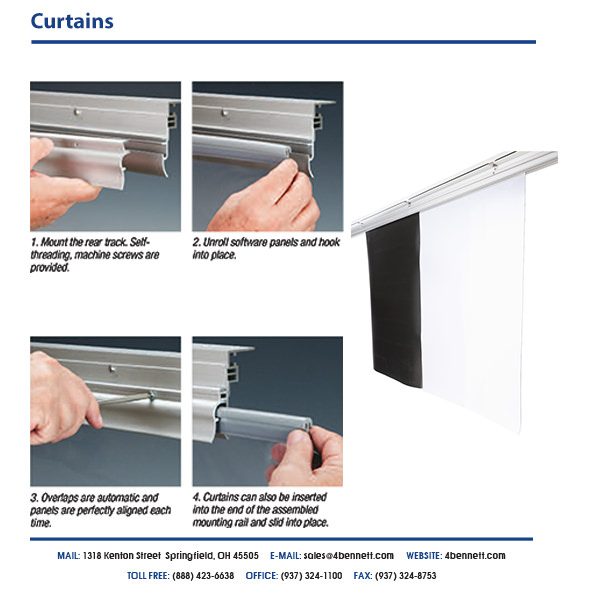
Precision Mounting: All curtains feature a Hook Bead top edge, allowing them to slide securely into the dedicated tracks of your cleanroom frame for a gap-free fit.
-
Versatile Configurations: Available in both Strip (for high-traffic entry points) and Panel (for perimeter walls) varieties to suit your specific workflow.
-
Custom Overlap: We calculate the necessary overlap based on your room’s airflow requirements to ensure positive pressure is maintained.
Material Options
Choosing the right material is essential for meeting your compliance standards. We offer several specialized options:
-
Anti-Static (ESD) Vinyl: Essential for electronics and semiconductor applications to prevent static discharge and dust attraction.
-
Standard Clear Vinyl: Provides excellent visibility and durability for general-purpose cleanroom applications.
-
Polysim (Non-PVC): A high-purity, polyurethane-based alternative for facilities that require a PVC-free environment or superior chemical resistance.
Expert Advisory
Not sure which thickness or material is right for your ISO rating? Our team doesn’t just sell curtains; we provide the expertise to ensure your barrier system supports your total contamination control strategy. Contact us today for a recommendation on the best configuration for your specific application.
Supporting Components
To complete your cleanroom build, these curtains are often paired with:
-
Grid Systems: For secure ceiling mounting.
-
M Series FFUs: To maintain the necessary airflow against the curtain barriers.
-
Sticky Mats: Placed at entry points to capture footborne contaminants and wheel-borne particulates before they enter the controlled zone
Material Science & Compliance
The performance of a cleanroom barrier is defined by its physical properties. Our curtains are manufactured using high-grade vinyl and specialized polymers to ensure they provide a consistent, non-outgassing, and durable seal. The following specifications represent the rigorous testing standards our materials undergo to ensure they meet the demands of controlled environments.
Technical Performance Data
The tables below outline the mechanical and thermal properties of our primary curtain materials. These benchmarks, tested via ASTM standards, ensure that your curtain system will withstand regular cleaning, maintain its structural integrity under pressure, and provide the necessary safety ratings (UL and NFPA) for facility insurance and fire code compliance.
Anti Static & Standard Vinyl Material Specifications
| Standard Properties | Specification | Test Method |
| Hardness Durometer | 79A | ASTM D-2240 |
| Tensile Strength % | 2400 | ASTM D-412 |
| Ultimate Elongation % | 350 | ASTM D-412 |
| Ultimate Tear PSI | 440 | ASTM D-1004 |
| 100% Module PSI | 1400 | ASTM D-412 |
| Brittle Temperature | -36˚F / -38˚C | |
| Min. Operating Temperature | 0˚F / -17˚ C | |
| Specific Gravity | 1.21 | |
| UV Stability | Excellent | |
| Flame Test (UL) | Pass | UV 94 V-O |
| Flame Test (NFPA) | Pass | NFPA 701 Small Scale |
| Surface Resistivity | < 1012 | ASTM D-257 |
Polysim™ Material Specifications
| Standard Properties | Specification | Test Method |
| Hardness Durometer | 90A/47D | ASTM D-2240 |
| Tensile Strength % | 3800 | ASTM D-412 |
| Ultimate Elongation % | 450 | ASTM D-412 |
| Ultimate Tear PSI | | ASTM D-1004 |
| 100% Module PSI | 1200 | ASTM D-412 |
| Brittle Temperature | 0˚F / -17˚C | |
| Min. Operating Temperature | 32˚F / 0˚ C | |
| Specific Gravity | 1.16 | |
| UV Stability | Good | |
| Flame Test (UL) | Pass | UV 94 V-O |
| Flame Test (NFPA) | Pass | NFPA 701 Small Scale |
| Flame Test (ASTM) | 10 | ASTM E-84 Class 1 |
| Smoke Test (ASTM) | 180 | ASTM E-84 Class 1 |
| Surface Resistivity | < 1012 | ASTM D-257 |
Understanding the Specs:
-
Surface Resistivity (< 10¹²): For the Anti-Static and Polysim options, this rating ensures that the material dissipates static charges, preventing the “attraction” of fine particles and protecting sensitive electronic components.
-
Flame Test (NFPA 701): Our materials pass the NFPA 701 Small Scale test, making them safe for use in industrial and laboratory settings that require fire-retardant materials.
-
Tensile Strength & Ultimate Elongation: These figures represent the material’s ability to resist tearing or deformation when personnel or equipment pass through the curtain strips frequently.
Expert Guidance on Specifications
Selecting the right material thickness and property profile is a critical step in cleanroom design. If your project requires specific chemical resistance charts or outgassing data not listed above, our technical team can provide the additional documentation needed for your certification.
Need help interpreting these specs for your ISO class? Contact our team for a detailed review of your requirements.
For a portable version of these technical details to include in your facility’s submittal package, you can Download the Specs PDF here.
How to Select the Right Curtain System
Selecting the proper cleanroom curtain involves more than just measuring the height of your enclosure. To maintain your required ISO rating, you must consider material properties, the frequency of access, and how the curtain interacts with your airflow.
1. Choose Your Material Based on Compliance
-
Anti-Static (ESD) Vinyl: Required for semiconductor, electronics, and medical device manufacturing where static discharge can damage components or attract unwanted particulates.
-
Standard Clear Vinyl: Ideal for general-purpose industrial cleanrooms where high visibility and durable environmental separation are the primary goals.
-
Polysim (Non-PVC): The professional choice for high-purity labs or pharmaceutical applications that require a PVC-free environment and superior resistance to chemical breakdown.
2. Select the Configuration for Your Workflow
-
Strip Curtains: Best for high-traffic entry and exit points. The individual strips allow personnel and equipment to pass through easily while the weighted overlap immediately pulls the seal back into place to maintain pressure.
-
Solid Panels: Ideal for the perimeter walls of a Softwall Cleanroom. Panels provide a more rigid, continuous barrier that is highly effective at containing airflow and preventing bypass.
3. Account for Airflow & Pressure
The effectiveness of your curtain is tied to your Fan Filter Units (FFUs). In a high-pressure environment, curtains must be properly weighted and overlapped to prevent “flaring,” which can allow unfiltered air to enter the room.
Expert Consultation
Every facility has unique challenges—from ceiling height restrictions to specific chemical sensitivities. At Bennett and Bennett, we specialize in helping you “spec out” the right system the first time.
Not sure if you need ESD-safe materials or which strip width is best? Contact our technical team for an evaluation of your project. We provide expert advice to ensure your curtains support your certification goals.
Complete Your System
Once you’ve selected your curtains, ensure you have the proper infrastructure for installation:
-
Grid Systems: Our curtains feature a Hook Bead top edge designed specifically to slide into our heavy-duty tracks.
-
Sticky Mats: We recommend placing these at every curtain entry point to prevent floor-level contamination.
Designing Your Controlled Environment
Building a cleanroom is a modular process. While the Curtains provide the environmental separation, the “system” only works when paired with the right structural and filtration components. At Bennett and Bennett, we specialize in helping you select the right combination to meet your specific ISO class requirements.
Step 1: Define Your Perimeter
The first step in creating your cleanroom is determining the mounting method for your curtains.
-
For existing rooms: Use our Grid Systems to create a suspended ceiling footprint.
-
For standalone zones: Integrate your curtains with a Floor Supported Softwall frame for a completely mobile or semi-permanent solution.
Step 2: Calculate Airflow Needs
Your curtains are designed to contain positive pressure, but they rely on Fan Filter Units (FFUs) to provide the clean air.
-
High Precision: Choose the M Series for variable speed control to dial in exact air changes.
-
Standard Pressure: Utilize the Q Series for reliable, cost-effective filtration.
Step 3: Implement Contamination Entry Protocols
A cleanroom is only as clean as its entrance. To protect the integrity of your build, we recommend:
Let Our Experts Help You Build
Don’t guess on your ISO compliance. We offer expert advisory services to help you spec out the entire room—from the number of FFUs required for your square footage to the best material for your specific industry (Pharma, Aerospace, or Electronics).
Ready to start your build? Contact our technical team today for a consultation. We will help you navigate the standards and provide a comprehensive quote for your full cleanroom system.



Reviews
There are no reviews yet.